

Hello and welcome back to another edition of THE POSTCARD, Unregistered’s fortnightly roundup of recommendations.
Thoughts, tools, and treats
Academia has long been challenged by independent writers, open-minded think tanks, and countercultural ventures. Meanwhile, more and more para-academic initiatives are emerging that leverage digital technologies and platforms such as Substack to revitalize and redefine intellectual life from outside the ivory tower. In his recent piece on the state of the humanities, Justin Smith-Ruiu listed some of these endeavours and argued that in order to reform themselves, universities need „external pressure from independent para-academic initiatives capable of modeling how the humanities are actually done.“ His article inspired me to dig a little deeper into „alt-ac.“ The result is this totally biased and incomplete map of the academia-adjacent.
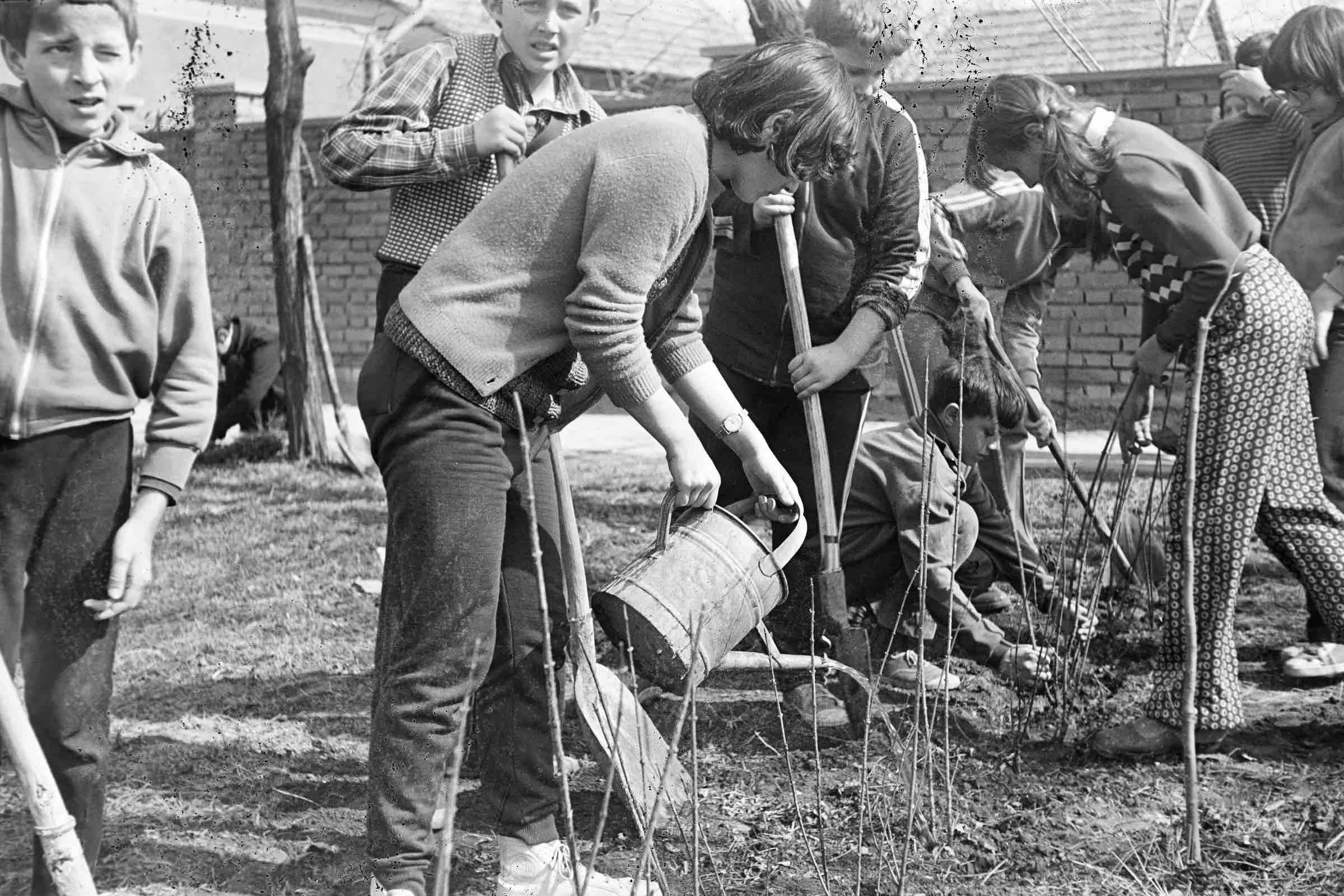
Inspired by Deep Springs College, an institution of higher learning founded in 1917, a series of “micro-colleges” seek to integrate academic rigor, manual labor, and community life – often in low-tech environments – instead of „taking online courses, or abandoning the humanities in favor of classes in business or STEM, or paying high tuition to fund the salaries of more Assistant Vice Provosts for Student Life.“ The New York Times describes them as „communitarian pragmatists, with liberal arts for the mind, labor for the body and an ethos of secular monasticism for the spirit. They are the descendants of philosophers like John Dewey.“
Great books programs
Many institutions and initiatives, both traditional and new, concentrate on great books, among them St. John’s College, the Catherine Project, or The Invisible College, a series of courses on literature for paid subscribers of John Pistelli’s newsletter Grand Hotel Abyss.
The Brooklyn Institute for Social Research
Founded in 2012 and named after the Institute for Social Research in Frankfurt, the BISR offers „community-based education“ and aims to „integrate rigorous but accessible scholarly study with the everyday lives of working adults and re-imagine scholarship for the 21st century.“ Among other programs, it offers one called „Praxis.“
The Program for Public Thinking
An initiative promoting „a more thoughtful, humane, and pluralistic public conversation“ that is co-sponsored by The Point magazine and the Parrhesia Program for Public Discourse at the University of Chicago. Founded in 2023, it offers a two-week summer workshop as its flagship program. Similar to the mission of the highly recommended magazine, it seeks „to cultivate habits of thought traditionally associated with liberal arts education but largely absent from our broader cultural discourse: analytic rigor, interpretive generosity, and the ability to test and question one’s own convictions.“
Matthew Strother Center for the Examined Life
A non-profit providing deep reading programs on a farm in the Catskills: „no grades, no credentials, no distractions — only the joyful, demanding work of thinking carefully, reflecting creatively, speaking honestly, and rediscovering what it means to live a good life.“ It was founded in 2023 by Berta Willisch, the widow of Matthew Strother, who died of cancer at the age of 35.
The Strother School of Radical Attention
SoRA is a Brooklyn-based non-profit founded by D. Graham Burnett. It is dedicated to „to push back against the fracking of human attention by coercive digital technologies“ and advance „Attention Activism“ through community programs in the study and practice of human attention.
Founded in 2025 by Justin Smith-Ruiu, this venture is dedicated to ensuring the humanities „remain vital and relevant as technology reshapes the horizon of human experience.“ Its programs include an essay prize, a fellowship, a summer school, a conference, working groups, and ed tech initiatives.
Noteworthy
“I believed in doing things the right way—reading the right way (to learn from books, not lecture them), thinking the right way (with both feet on the ground), writing the right way (like an actual human being), teaching the right way (helping students to be better versions of themselves, not little versions of me)—and I wasn’t going to yield the field without a fight. I wasn’t going to let the bastards grind me down.“
—William Deresiewicz in his moving account „Why I Left Academia (Since You’re Wondering)“
A mystery link leading into the unknown
Get something para-academic...
As always,
Dirk
P.S.: Feel free to send me pointers to articles, books, sites, pods, tools, and treats that could be interesting for this roundup. While I cannot promise to link them, I read and appreciate every hint.
So many great resources to share. My friends have appreciated. Thank you. 🙏