

When I returned to Budapest (where I lived from 2004 to 2009) for a few days at the end of last year, it wasn’t just the lost independence of the judiciary, media, culture, and education that my conversation partners complained about, but the increasingly deteriorated infrastructure caused by Orbán’s nepotism and the growing impossibility of leading a normal life that comes with it. Last week, the gap between state propaganda and the economic reality of the people finally brought down the Fidesz government, which had appeared unbeatable.
A number of analyses have underscored the role of day-to-day life in the election results. Discontent with the mundane aspects of life served as a unifying force for an otherwise deeply divided voting bloc. Gabor Gyori, a political analyst with the Policy Solutions research organization in Budapest, told the New York Times that voters longed „for normalcy, meaning moving away from constant hysteria and toward a governmental focus on everyday issues.“ Charles Lane emphasized that „even a deeply entrenched right-wing populist leader can overplay his hand, and alienate the public, by failing to deliver on issues that most affect daily life.“ And Ross Douthat concluded, „that the best political response to populism is usually to deal with its concrete policy demands, rather than insisting that a democratic emergency requires people to back the establishment no matter what.“
To be sure, engaging with political ideas is exciting, and political movements need motivating rhetoric, but at the end of the day, the litmus test for any policy remains whether it improves people’s lives—or rather, whether it allows for a ‘normal’ life. There is comfort and hope here against right-wing agitation and left-wing overreach alike. However much digital echo chambers have caused political discourse to drift away from reality, most people in today’s fragmented society still seem to find political contentment in the functional, the regulated, and the ordinary.
Interestingly, this insight is increasingly gaining traction in communication. David Plouffe, Barack Obama’s 2008 campaign manager, recently shared interesting thoughts for winning elections in a climate of populist polarization:
„No data. No stats. Instead, focus on personal stories from local voices (...) The voters who decide this election should be the lead storytellers (...) Don’t script anyone. Turn on the phone and camera and let people tell their story. As a former political ad maker, I can humbly say the best lines never come from professionals. They come from people in a language that is raw, real and accessible. Regular, nonpolitical Americans are the most effective influencers. That’s especially true on TikTok, which prohibits political advertising. Anything that smells paid and prepackaged will backfire.“
Lulu Cheng Meservey, who pioneered the go-direct approach, framed the shift in communication more broadly, not just limited to political communication:
„the real has never been more precious, refreshing, special, and rare. We need real people, building real things that actually matter, through real discipline and effort, with real outcomes in the real world.“
More specifically:
„Designing real world events and artifacts, leaving people with memories that far outlast the cheap ‚impressions‘ generated by brainrot content troughs
Showing up as real humans, with real flaws and foibles, instead of ultra-polished personas following AI scripts
Forming real relationships that will weather time and tide“
When it comes to communication and campaigns, however, things are tricky, as the fabrication of ‘realness’ undermines the very thing it’s trying to create. Goethe, 1807: „One feels design and so is out of humour.“ This paradox, however, does not alter—in fact, it only confirms—a profound yearning for a pre-political being-in-the-world within a society saturated by signs and feverish debates.
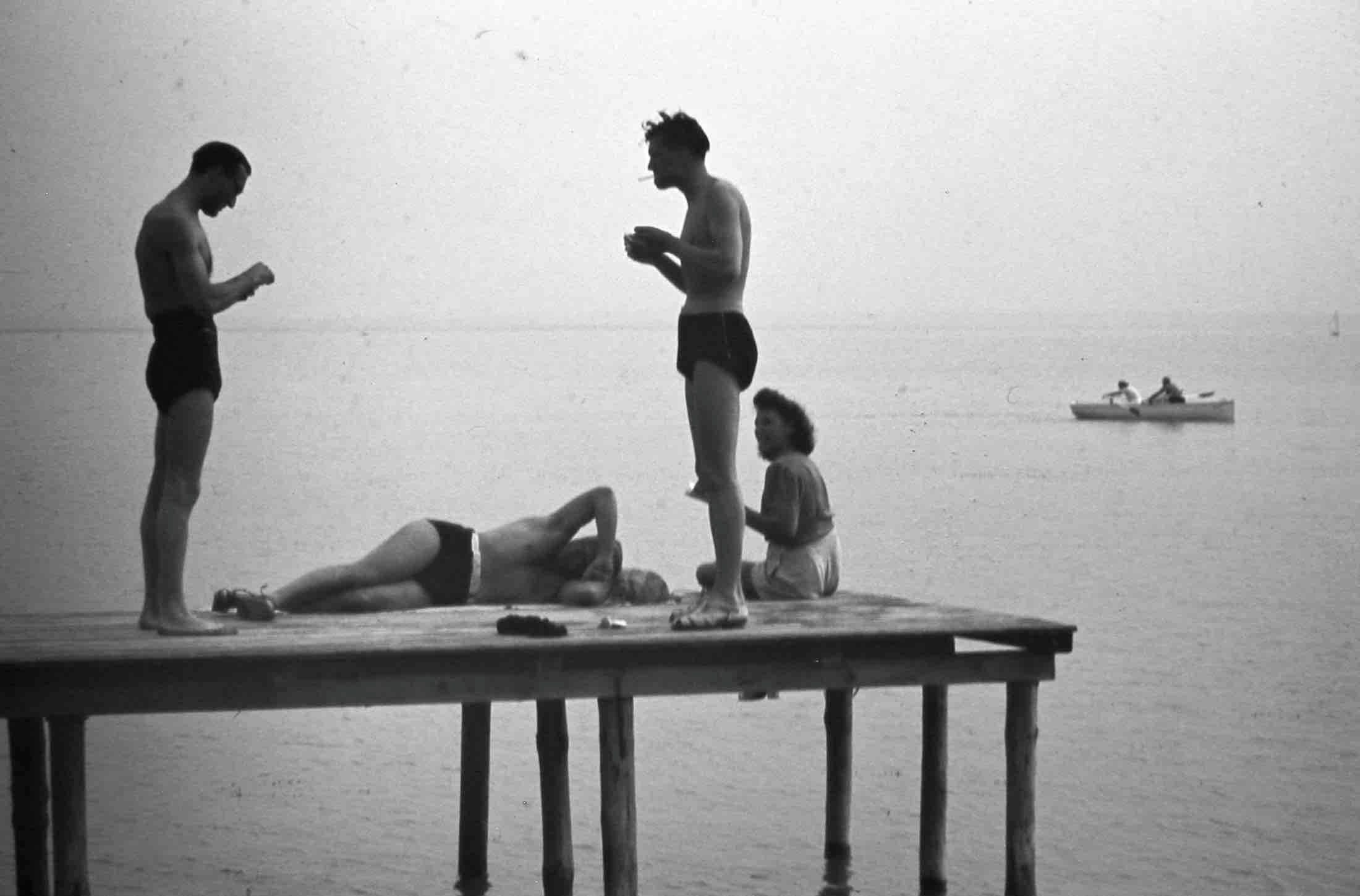
Back in the summer of 2023, Andrew Sullivan—hardly the calmest of commentators—put out an unusual article titled “A Normal Summer And A Normal President,” in which he states:
“For the first time in years, this feels like a normal summer (...) we’re traveling again; taking holidays; seeing old friends and family, catching up after that strange, lost interlude of plague, when years of our lives suddenly seemed to evaporate into a time warp. In this little resort town I live in each summer, the old rituals are back with some punch: the crowds at the daily tea-dance, the daily trek to the beaches, the late-night drunken shenanigans.“
Sullivan argued for savoring the fleeting moment he described as „an interlude, a throwback, a pause.“ It is precisely what the Hungarian people yearned for when they voted the corrupt autocrat out of power. A moment whose lightness is reminiscent of what Hungary—next to intellectual seriousness—stood for for a long time: a lighthearted, joyful life, „the kind of thing that only really exists in a free society, where politics is kept at a distance, and private life can have its moment in the sun.“
I find the idea that Joe Biden was a "normal" president to be genuinely offensive revisionism. We're talking about a man who avoided any kind of contact with the press whenever he could get away with it to prevent anyone from noticing he was senile, who got away with it for far longer than he should have, precisely because Trump had become a monster more because he made headlines than because of what those headlines were actually about. If this farce is supposed to be democracy, it shouldn't surprise anyone that voters decided to return the repeatedly convicted felon to power than have to endure that smug condescension for another four years with another candidate whose complete inability to form coherent sentences was just something we were supposed to pretend not to notice for the sake of maintaining normalcy.