

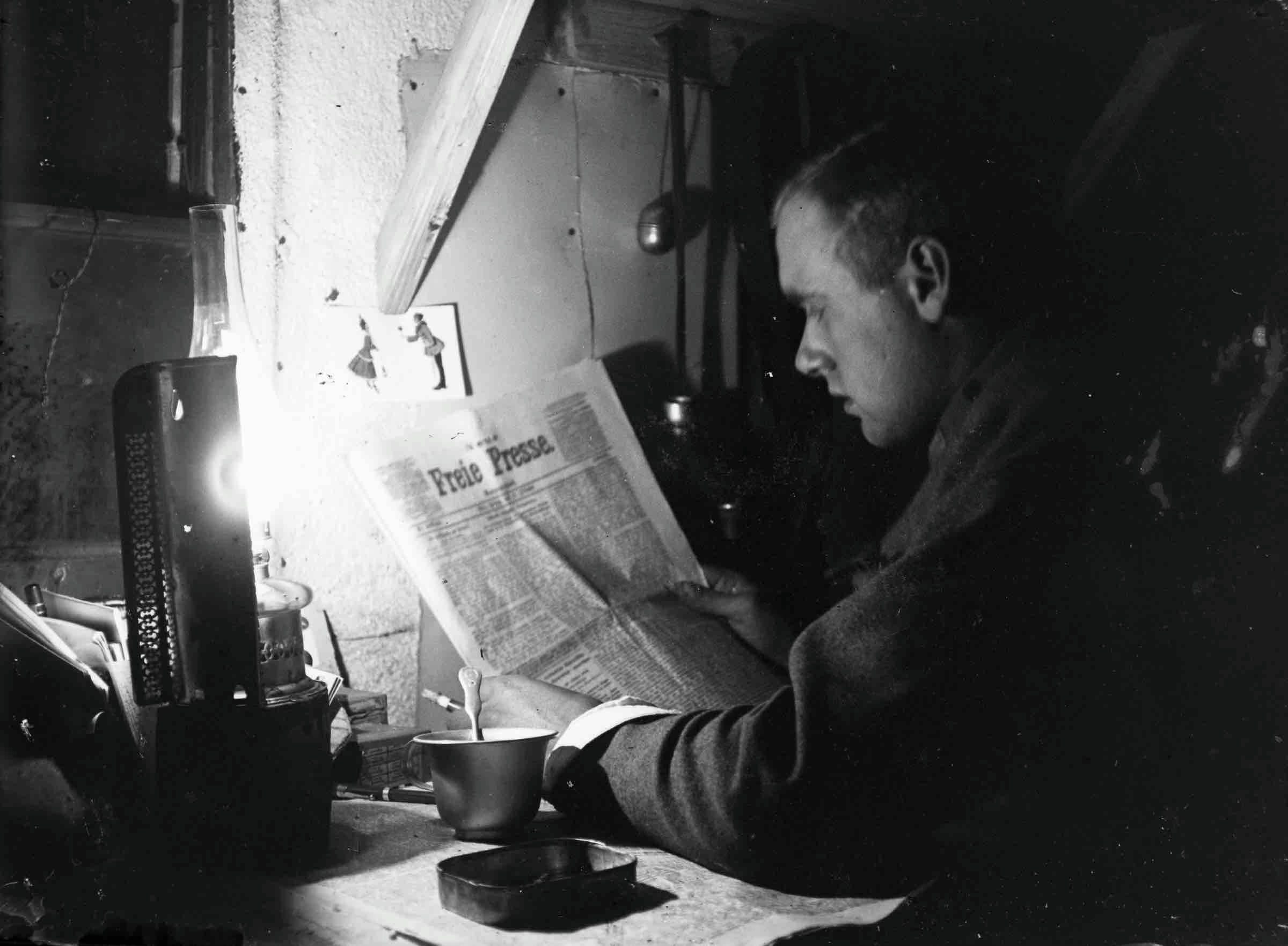
Nothing seems more imperative and self-evident these days than reading the news. And yet there is no shortage of well-meaning advice to avoid the news, go offline, read books, and concentrate more on what’s within one’s own control. It might seem that such advice would take care of itself, given that its very proponents write for newspapers themselves and rose to prominence there. However, it’s a fair question: why pay attention to news that, so say the least, doesn’t serve your well-being?
Let me be clear: My question isn’t why there should be a free press. That a fourth estate is needed to speak truth to power requires as little explanation these days as it did during the three days of the Condor. Given that original reporting, correspondents, and fact-checking are costly, it appears incumbent upon a concerned citizen to subscribe to quality newspapers. Furthermore, because independent newsletter writers highlight angles that legacy media neglects for whatever reasons, it’s prudent to support them financially. Remember: the truth is paywalled, but the lies are free.
Supporting quality journalism, however, doesn’t inherently require you to read it. Not everything that is fit to print may be worth my time. So, why read the news? I can think of three reasons.
1. Raw material
In a world of fake news and slop, trustworthy facts are more important than ever. However, even the most reputable news coverage we consume filters, contextualizes, and comments. What to do to be an informed citizen rather than just someone with an opinion? Focus on unprocessed facts such as original sources and in-depth investigative journalism. I remember that the newspapers I read in my school days contained considerably more source material than they do now: legislative texts, political speeches, all sorts of documents. Raw information like this makes a strong case for reading the news, because it serves as a grounding force in a world saturated with interpretation. It provides gravity to judgments.
2. Educational impulses
I confess I’ve always learned a lot from newspapers, magazines, and blogs, and continue to do so. It started with young me looking up foreign words while reading. Subsequently, newspapers became my source for books, exhibitions, travel destinations, design objects, and even evidence-based self-help. Currently, I’m finding inspiration in Substacks, whether it’s economists delving into culture, the digital literary sphere, or individual writers whose voices I no longer want to miss.
As long as references to ideas and aesthetic experiences are not confused with cultivation itself, as long as they don’t remain hearsay or half-education, and as long as stimulation doesn’t prevent thorough understanding, there’s nothing wrong with turning to press publications. Quite the opposite: even today, and particularly in an era where legacy and independent media coexist, journalistic texts can contribute to widespread education.
3. A place in the world
Among the posthumously published aphorisms in Georg Wilhelm Friedrich Hegel’s “Wastebook” (1803-1806) is an entry1 on reading newspapers:
“Das Zeitungslesen des Morgens früh ist eine Art von realistischem Morgensegen. Man orientiert seine Haltung gegen die Welt an Gott oder an dem, was die die Welt ist. Jenes gibt dieselbe Sicherheit wie hier, daß man wisse, wie man daran sei.“
“Reading the newspaper first thing in the morning is a kind of realistic morning blessing. One aligns one’s attitude towards the world either with God or with what the world is. The former offers the same assurance as the latter, that one understands one’s position.”
It appears that Hegel saw the newspaper’s comprehensive connection to current affairs as a means of grounding oneself in reality, of anchoring oneself in the world. Alexander Kluge has delved deeper2 into Hegel’s morning readings:
“Der Philosoph las außer den Berliner Blättern täglich die Edinburgh Review. Er war auf das Detail kapriziert. Das findet sich im Rohmaterial der Nachricht, nicht in der Meinung. Hegel brauchte mehrere Zeitungen, um unter der Tünche der Meinung die Einzelheiten wiederzuerkennen: Er las nicht, er produzierte. Stets neugierig auf die Wirklichkeit“
“In addition to the Berlin papers, the philosopher read the Edinburgh Review daily. He was fixated on the details. These reside in the raw material of the news, not in the commentary. Hegel needed several newspapers to identify the specifics beneath the gloss of opinion.“
In a world of disturbing news, disinformation, and disruption, it’s easy to see a grounding, but hard to see a blessing (albeit secular) in reading the news. Sure, being aware of events that might affect one’s life can instill a sense of control that can be interpreted as a blessing. But Hegel’s remark carries a deeper layer of meaning. What I mean is a sense of not being adrift, but rather, despite the profound concerns reading the news stirs up, feeling like a part of the world, with all the demands, duties, and delights that entails.
Why read the news? To hear the voice of the news anchor, saying:
“Good Night, and good luck.”
“Questo è Morning, cominciamo.“
G.W.F. Hegel: Jeaner Schriften 1801-1807. Werke 2. Frankfurt/Main 1986, S. 547. My translation.
Translation mine.
Reading the News is a bad habit and can become an addiction like smoking. You read the News because of your deep seated insecurities about your future. Shit happens and you crave to know it so that you can prep for it. The News businesses need to make money and know this, and thus feed you with all the shit that happens and make it even more horrifying. This again feeds into your insecurities, and make you read even more News.
Best to abolish it completely. When REAL shit happens and it will affect you, you'll get to know besides the News.
I just can't see how reading the News could you make "more grounded"or let you feel more "one with the world". It's quite the opposite.